



by Gabrielle Hernandez
What began in a design classroom is now moving toward real-world impact. A student-led team formed through the MA in Design focused on Health, a collaboration between the Department of Design and Dell Medical School, is advancing a patient-centered wearable solution for people living with Hidradenitis Suppurativa (HS). Their work recently earned both $30,000 in seed funding and the audience-choice honor from Texas Health Catalyst.
HS is a chronic inflammatory skin condition that causes painful lesions, drainage, and scarring, often in sensitive areas of the body. Beyond the physical symptoms, this condition can significantly impact daily life, making it difficult for patients to work, exercise, sleep comfortably, or even sit without pain.
Recognizing a gap in support and useful products for this community, board-certified dermatologist Dr. Venessa Peña-Robichaux of Dell Medical School challenged students to develop a solution. The result was Compreva, originally launched as a capstone project and now formalized as Compreva, LLC.
The team initially focused on patient interviews to better understand the day-to-day struggles of living with HS. What they heard was both heartbreaking and motivating.
“Some of the stories that we learned… were just so devastating to hear,” said Nuha Arefin, a dual MA/MD candidate. “There was so much shame at the core of it.” Patients described sleeping on towels to manage chronic drainage, hiding their condition from loved ones, or leaving school and work because of pain and embarrassment. Following these conversations, the team committed to building something deeply patient-centered.
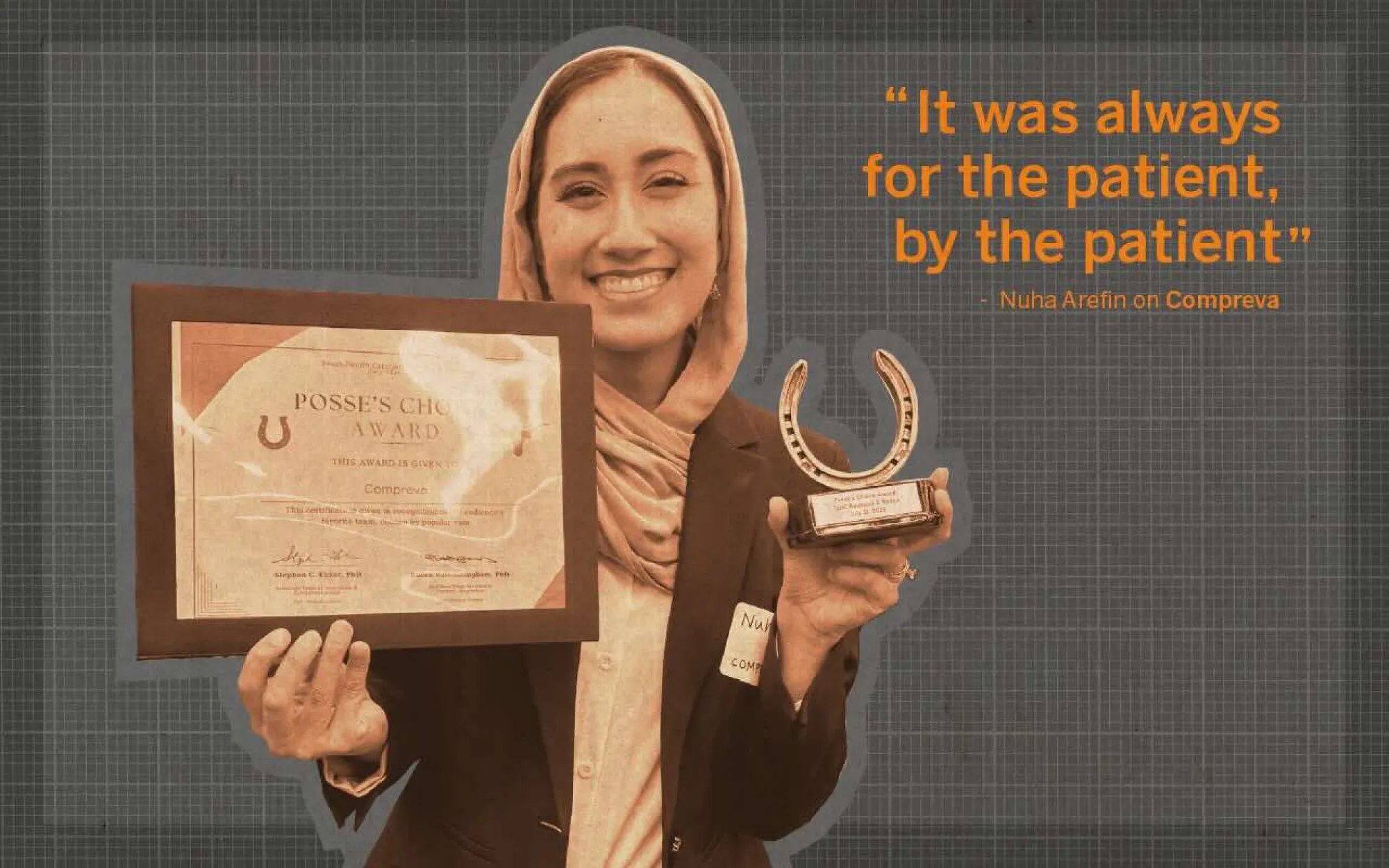
“It was always for the patient, by the patient,” Arefin said. Their goal is to create a garment that prioritizes comfort, breathability, discretion and affordability, bridging the gap between improvised DIY solutions and costly specialty products. However, designing such a product proves complex.
“It’s very difficult to create a garment when you want breathability, but you also need compression,” Arefin explained. The garment must be soft enough to avoid irritating sensitive skin, yet structured enough to hold wound dressings in place and address odor concerns. To meet these challenges, the team conducted extensive research into textiles, wound care materials, and antimicrobial technologies, collaborating with clinical and industry mentors to refine their prototype.
Their progress drew the attention of Texas Health Catalyst, a UT Austin initiative that supports promising health innovations with mentorship and milestone-based seed funding. In August 2025, Compreva received a $30,000 grant to advance fabric research, prototype development, and usability testing. Shortly after, at the Texas Health Catalyst Roundup & Rodeo, the team earned Posse’s Choice, the audience favorite award, reflecting how their story and solution resonated with clinicians, innovators, and community members.
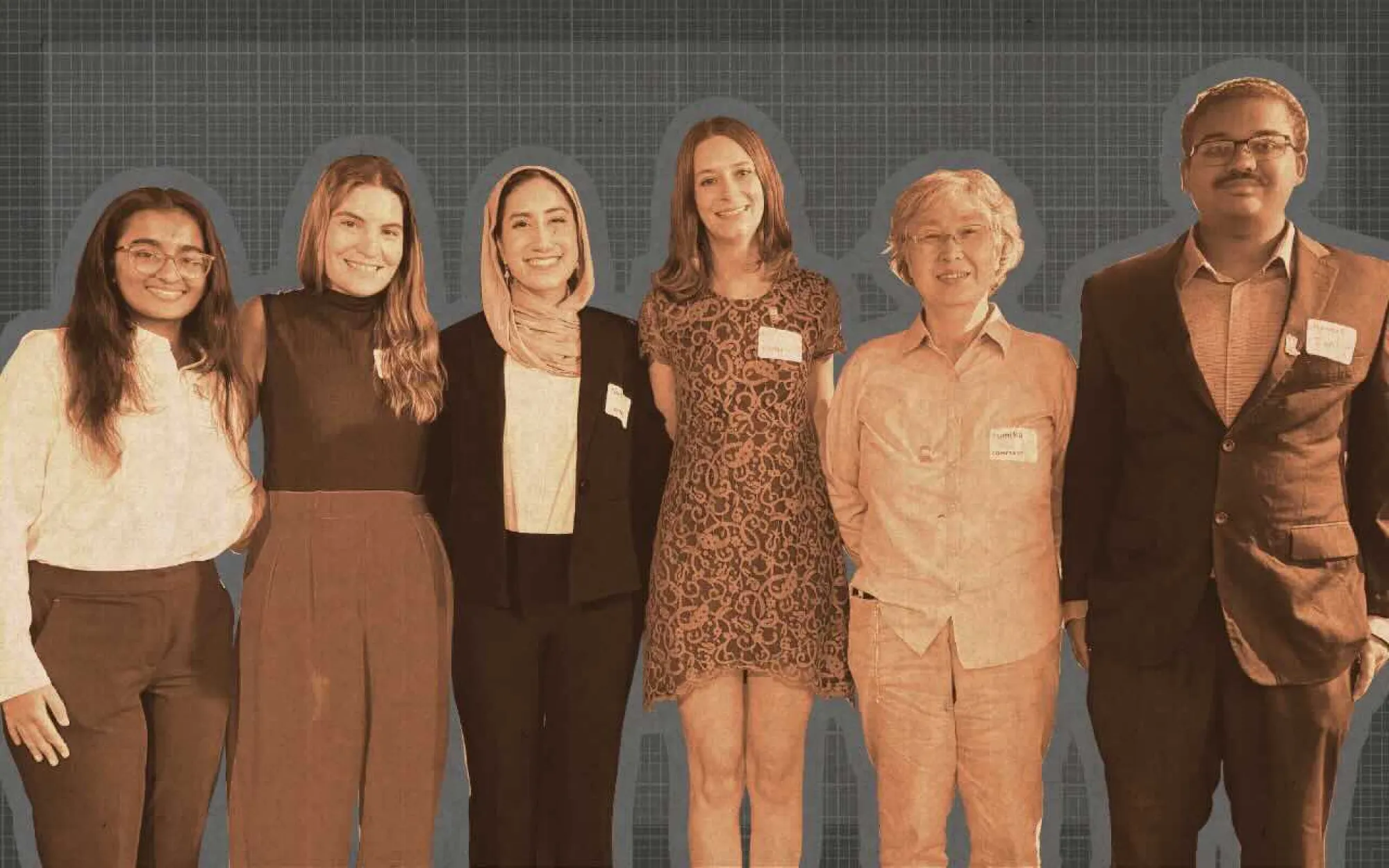
Compreva’s capstone team includes:
- Nuha Arefin – Dual MA/MD candidate (Dell Medical School Class of ’27)
- Fumiko Kokura – MA Class of ’25
- Mariam Ahmed – MA Class of ’25
- Leslie Scherger – MA Class of ’25
- Rodger Rivera – MA Class of ’25
With their award-winning health innovation, Compreva stands as a powerful example of how design, medicine, and empathy can come together to create meaningful change.
Gabrielle Hernandez is the communications manager for the School of Design and Creative Technologies.